🪵 Crawl Space & Sagging Floor Repair in Tacoma, WA
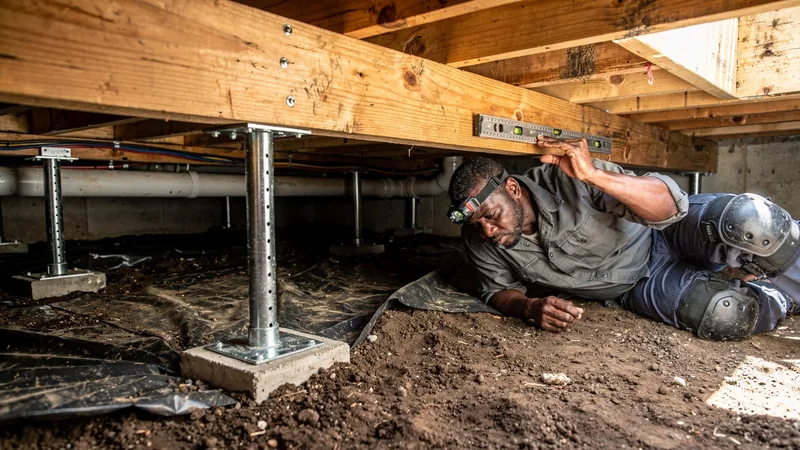
Tacoma Foundation Pros provides crawl space & sagging floor repair in Tacoma, WA.
Free Estimates · Foundation & Pier Repair · Crawl Space Repair
Fixing bouncy, sloping or sagging floors with added posts, new beams or sistered joists in the crawl space.
Angi puts the average for adding a support post at about $2,500 and lists joist repair at $4,000 to $12,000 (2026); HomeGuide prices sistering at $150 to $325 per joist and a supplemental beam with posts at $1,000 to $5,000. Sagging floors over a crawl space usually come from posts set on poor footings, undersized beams, or wood weakened by moisture.
Moisture First
Wet crawl spaces rot posts and joist ends. If framing is being repaired because of moisture, ask how the water will be handled too: a vapor barrier, drainage or encapsulation. Otherwise the new wood faces the same conditions.
Engineer or Not
Simple post additions are routine; replacing a main beam or changing load paths may need an engineer and a permit. HomeGuide puts an engineer's assessment at $300 to $800. Ask the provider which applies.
Frequently Asked Questions
How much does foundation repair cost in Tacoma?
National cost guides put most repairs between $2,200 and $8,200, about $5,200 on average (Fixr, January 2026), with piers at $1,000 to $3,000 each. No guide publishes Tacoma-only prices; a local provider prices the job after an inspection.
How much does an earthquake retrofit cost?
HomeGuide lists $3,000 to $10,000 for a whole-house retrofit (2026) and Angi a national average of $6,082. Bolting alone runs about $1,000 to $5,000 and cripple wall bracing about $1,000 to $3,000.
My floors are bouncy and sloping. Is that the foundation?
Often it is the crawl space framing instead: posts on poor footings, undersized beams or joists weakened by moisture. Angi puts an added support post at about $2,500 on average. A floor level survey and a crawl space check tell the two apart.
Are foundation cracks normal?
Narrow vertical shrinkage cracks are common in concrete. Wide cracks, cracks wider at one end, horizontal cracks and offset cracks suggest movement and deserve an inspection. Mark the ends with a date to see whether they grow.
Does Tacoma's rain affect foundations?
Wet soil softens and moves more, and water pressure builds against walls. Sea-Tac averages 39.34 inches of precipitation a year, mostly from October to March (NOAA 1991-2020). Gutters, downspouts and grading are the first line of defense.
What is the difference between helical and push piers?
Push piers are driven using the weight of the house; helical piers are screwed in and can carry lighter structures like porches and additions. Both fall around $1,000 to $3,000 per pier in national guides.
Should I encapsulate my crawl space?
If the crawl space is damp, smells musty or has mold on framing, sealing it can help. This Old House puts encapsulation at about $5,500 on average. Fix standing water first, or the liner traps it.
Do I need a permit for foundation work?
Piers, foundation replacement, earthquake retrofits and many structural repairs usually need a permit; simple crack injection often does not. Rules differ between Tacoma and each nearby city, so ask the provider who files it.
Should I get a structural engineer?
For large or uncertain repairs, an independent engineer's report can be worth it; HomeGuide puts an assessment at about $300 to $800. It gives a second view before you commit to piers or beam replacement.
Does homeowner's insurance cover foundation repair?
Standard policies usually exclude settlement and earth movement; earthquake damage needs separate earthquake coverage. Check your policy and keep records of any retrofit.
What areas does this site cover?
Tacoma, Lakewood, University Place, Puyallup, Federal Way, Gig Harbor, Fife, Fircrest and Steilacoom, plus Milton, Edgewood, Sumner, Bonney Lake, Ruston and DuPont. Availability is confirmed when a provider contacts you.
What should a written foundation quote include?
The cause found, floor level readings, the method, the number and location of piers, posts or anchor bolts, permits and who files them, cleanup, and the written workmanship and manufacturer warranties.